The Legal Ops Buying Bible
Navigating the AI Marketplace in 2026
The Legal Ops Buying Bible
Navigating the AI Marketplace in 2026
Contents
10 mins
Contents
10 mins
Introduction: The New Mandate for Legal Ops
You’ve been tasked with “finding AI efficiencies” for your in-house legal team. It sounds simple enough - until you open the floodgates of vendors, buzzwords, and marketing that over-promises and under-delivers.
In reality, the AI tools marketplace for legal and compliance teams is chaotic. Everyone’s selling “AI transformation,” yet tech solutions on their own rarely actually deliver measurable business value. Under pressure to move fast, many legal operations leaders risk wasting spend, eroding trust, and missing the chance to lead strategically.
But done right, AI adoption can turn Legal Ops into one of the most valuable strategic partners in the business - accelerating compliance, enabling smarter risk management, and freeing your team to focus on higher-value work.
Our “Buying Bible” cuts through the noise. You’ll find practical frameworks, questions, and examples to help you:
Identify the right use cases for AI in your legal function
Evaluate and select vendors with confidence
Build the business case and measure ROI
Drive adoption and demonstrate impact
In other words, this is your guide for buying (and seamlessly implementing)
AI tools that actually work.
Watch the full podcast episode on YouTube
Introduction: The New Mandate for Legal Ops
You’ve been tasked with “finding AI efficiencies” for your in-house legal team. It sounds simple enough - until you open the floodgates of vendors, buzzwords, and marketing that over-promises and under-delivers.
In reality, the AI tools marketplace for legal and compliance teams is chaotic. Everyone’s selling “AI transformation,” yet tech solutions on their own rarely actually deliver measurable business value. Under pressure to move fast, many legal operations leaders risk wasting spend, eroding trust, and missing the chance to lead strategically.
But done right, AI adoption can turn Legal Ops into one of the most valuable strategic partners in the business - accelerating compliance, enabling smarter risk management, and freeing your team to focus on higher-value work.
Our “Buying Bible” cuts through the noise. You’ll find practical frameworks, questions, and examples to help you:
Identify the right use cases for AI in your legal function
Evaluate and select vendors with confidence
Build the business case and measure ROI
Drive adoption and demonstrate impact
In other words, this is your guide for buying (and seamlessly implementing)
AI tools that actually work.
Watch the full podcast episode on YouTube
Section 1
Section 1
You’ve Been Told to Find an AI Tool - Where Do You Start?
Before you buy anything, get clear on the problem you’re solving. Too many teams start with a tool in mind instead of a pain point - and end up with shelfware instead of solutions that drive step-change.
You’ve Been Told to Find an AI Tool - Where Do You Start?
Before you buy anything, get clear on the problem you’re solving. Too many teams start with a tool in mind instead of a pain point - and end up with shelfware instead of solutions that drive step-change.
If you can’t describe your General Counsel’s (GC) pain point in a sentence, you’re not ready to solve it with AI.

Kunal Vankadara
CO-FOUNDER, HAAST
If you can’t describe your General Counsel’s (GC) pain point in a sentence, you’re not ready to solve it with AI.

Kunal Vankadara
CO-FOUNDER, HAAST
Step 1
Step 1
Define Your Problem Clearly
Start by interviewing your GCs or senior stakeholders. What’s the single most time-consuming, repetitive, or error-prone task draining your team’s time?
Here are a couple of common use cases identified in Haast’s enterprise clients:
Reviewing marketing materials for compliance deviations
Organizational self service for contracts and documents
Reviewing third-party contracts
Legal knowledge and contract data management
Contract intelligence
Define Your Problem Clearly
Start by interviewing your GCs or senior stakeholders. What’s the single most time-consuming, repetitive, or error-prone task draining your team’s time?
Here are a couple of common use cases identified in Haast’s enterprise clients:
Reviewing marketing materials for compliance deviations
Organizational self service for contracts and documents
Reviewing third-party contracts
Legal knowledge and contract data management
Contract intelligence
Step 2
Step 2
Prioritize Use Cases for Quick Wins
From these initial conversations - hone in on one repeatable, measurable workflow.
Look for:
Prioritize Use Cases for Quick Wins
From these initial conversations - hone in on one repeatable, measurable workflow.
Look for:
High-volume
Happens frequently (e.g. content review requests)
High-volume
Happens frequently (e.g. content review requests)
High-impact
Saves meaningful time or reduces real risk
High-impact
Saves meaningful time or reduces real risk
Low-risk
Doesn't expose sensitive or novel legal areas

Low-risk
Doesn't expose sensitive or novel legal areas
Teams that focus on one repeatable workflow first see faster adoption and clearer ROI.

Bec
HEAD OF CUSTOMER, HAAST
Teams that focus on one repeatable workflow first see faster adoption and clearer ROI.

Bec
HEAD OF CUSTOMER, HAAST
Step 3
Step 3
Quantify ROI Before You Start
Many legal teams struggle to have a clear discussion about ROI because their current challenges are largely manual. Measuring the “before” state accurately, especially when work is ad hoc or undocumented, can be difficult.
While AI solutions can unlock significant efficiencies, it’s important to set realistic expectations. AI is not a magic wand that instantly transforms legal operations. It still depends on sound processes, quality data, and human oversight to deliver value.
Teams that achieve the strongest ROI are those that start with:
Quantify ROI Before You Start
Many legal teams struggle to have a clear discussion about ROI because their current challenges are largely manual. Measuring the “before” state accurately, especially when work is ad hoc or undocumented, can be difficult.
While AI solutions can unlock significant efficiencies, it’s important to set realistic expectations. AI is not a magic wand that instantly transforms legal operations. It still depends on sound processes, quality data, and human oversight to deliver value.
Teams that achieve the strongest ROI are those that start with:
Clear use cases
Focus on specific, repeatable pain points
Measurable success criteria
Know how you’ll define improvement
A role for human judgement
Design AI to augment, not replace, people
Clear use cases
Focus on specific, repeatable pain points
Measurable success criteria
Know how you’ll define improvement
A role for human judgement
Design AI to augment, not replace, people
Doing this analysis upfront not only strengthens your business case but also supports rollout and adoption - because you’re clear on what success looks like and how you’ll measure it.
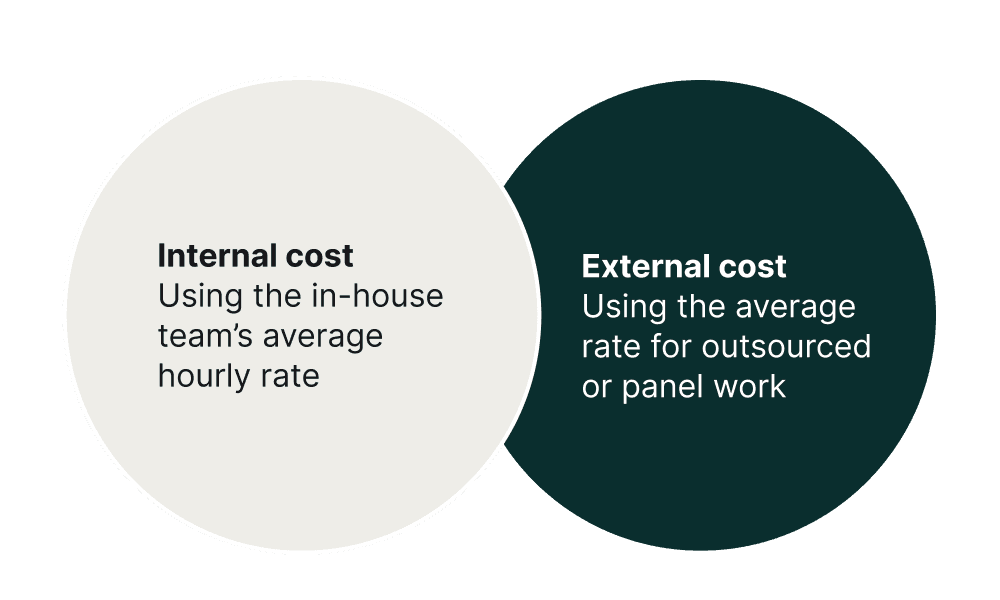
Finally, set a simple ROI framework early. You might calculate two baselines:
Doing this analysis upfront not only strengthens your business case but also supports rollout and adoption - because you’re clear on what success looks like and how you’ll measure it.
Finally, set a simple ROI framework early. You might calculate two baselines:


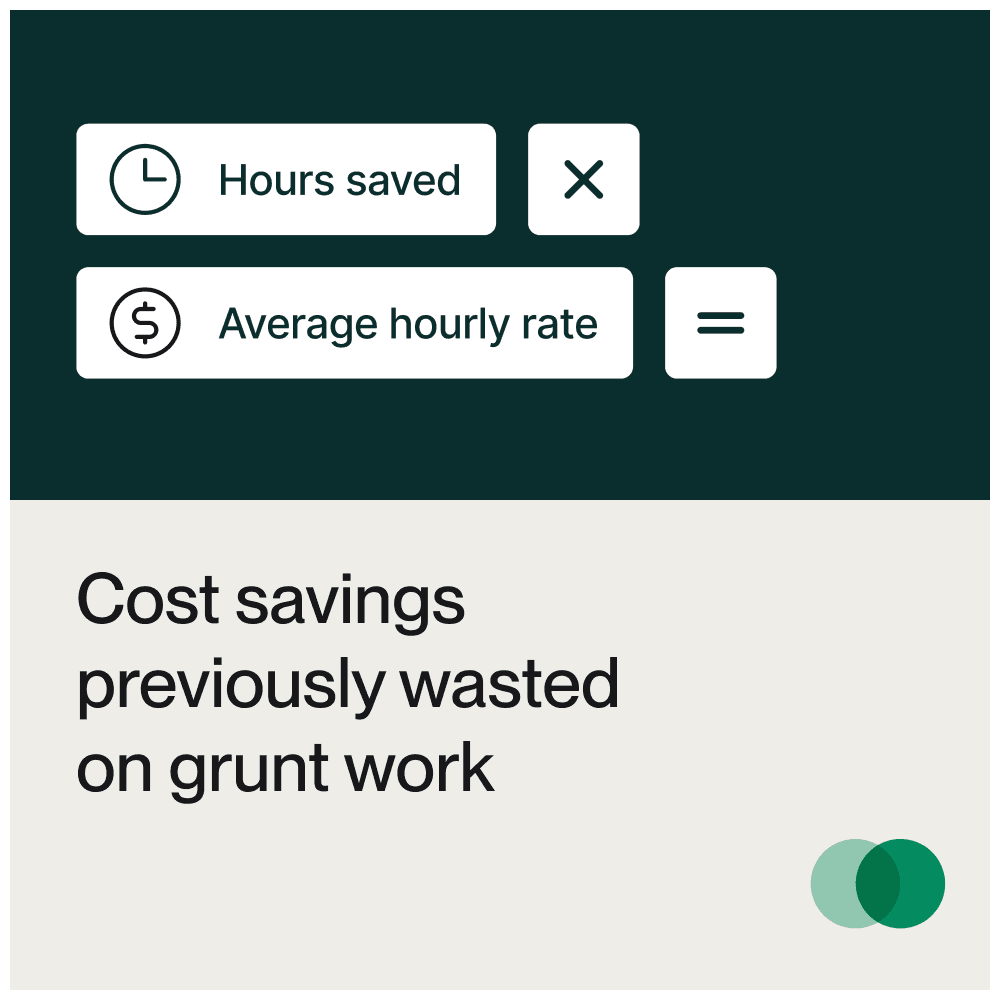
This provides a tangible way to demonstrate value as automation and efficiencies take effect.
A few example formulas we’ve seen work for our clients:
This provides a tangible way to demonstrate value as automation and efficiencies take effect.
A few example formulas we’ve seen work for our clients:

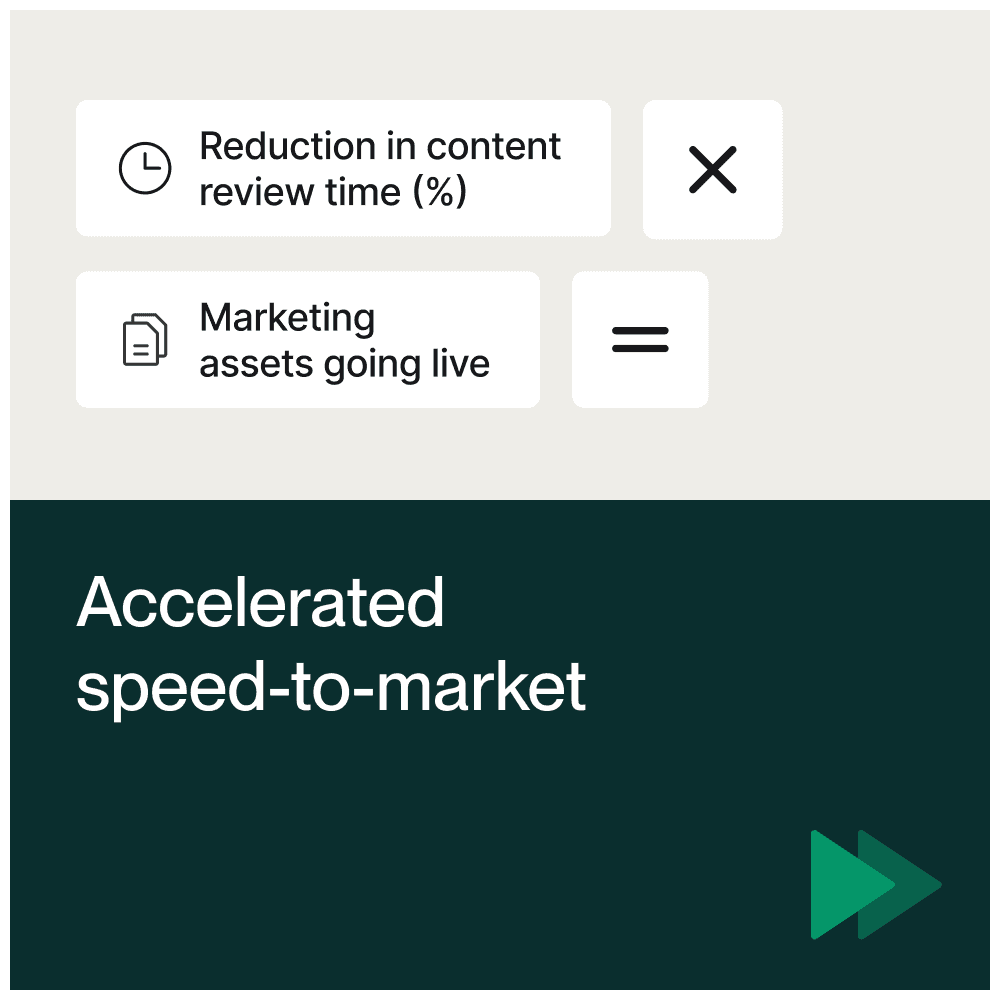
And increasingly, legal teams are pairing these efficiency gains with revenue-linked metrics. Faster approvals and fewer bottlenecks allow customer-facing teams to launch campaigns, offers, and product updates earlier - which directly influences commercial outcomes. For example:
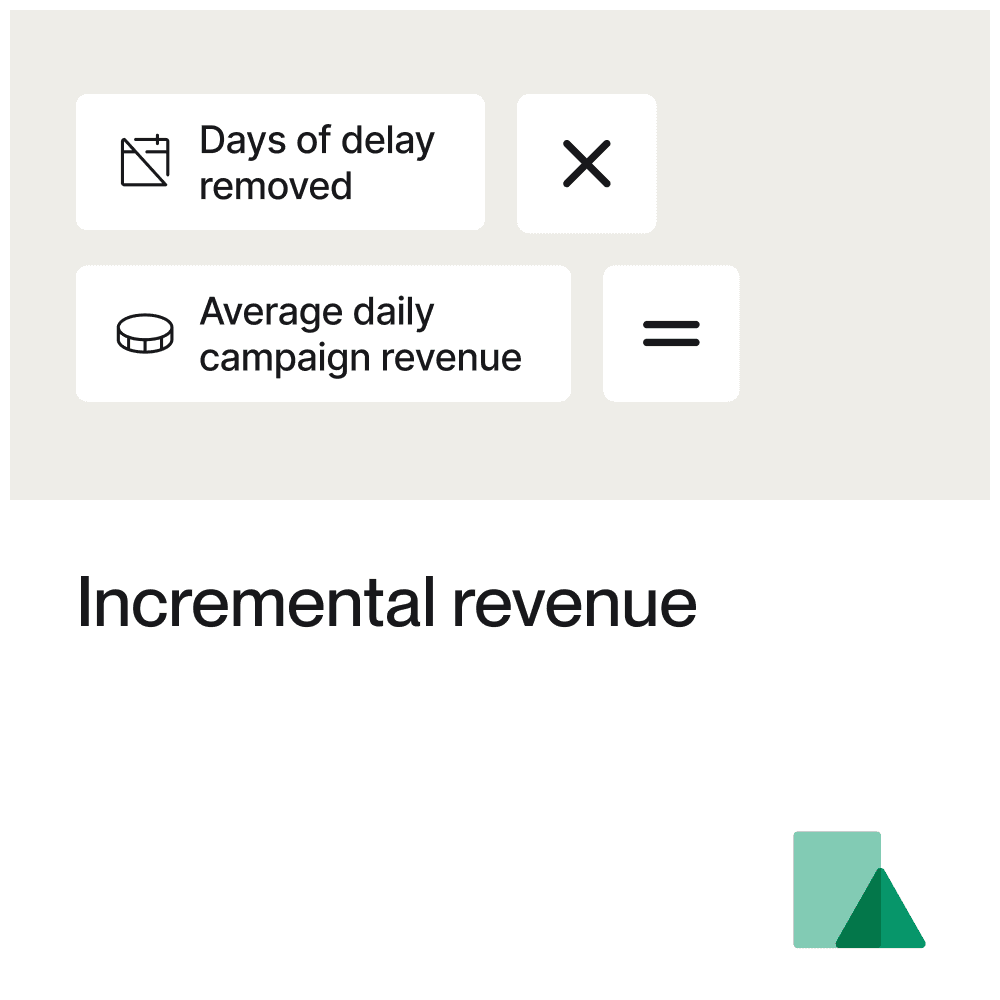




Even directional numbers help anchor expectations and demonstrate that Legal isn’t just reducing cost -it’s actively enabling growth.
Section 2
Section 2
Cutting Through the Noise: Understanding the Legal Tech and AI Marketplace
Over the past 12 months, the legal tech market has exploded. It’s become impossible for any Legal Ops function to keep up, plus be able to easily decipher loud marketing vs. tools that will actually deliver value.
An easy framework to begin assessing the marketplace is to split solutions into ‘Generic AI’ and ‘Domain specific AI for legal.”
Generic AI refers to large language models (LLMs) and general-purpose AI platforms that can be applied to multiple use cases. Popular foundational models include: Open AI’s GPT, Anthropic’s Claude, Google’s Gemini, Microsoft’s Copilot
Domain Specific AI for legal is when a tool is built for distinct legal workflows and use cases.
Some examples of legal agents that can be used are for:
Information retrieval (surface material from large datasets)
Drafting assistance (generate first-pass contracts, clauses and legal docs)
Reviewing documents (checking for organization and regulatory compliance.)
Cutting Through the Noise: Understanding the Legal Tech and AI Marketplace
Over the past 12 months, the legal tech market has exploded. It’s become impossible for any Legal Ops function to keep up, plus be able to easily decipher loud marketing vs. tools that will actually deliver value.
An easy framework to begin assessing the marketplace is to split solutions into ‘Generic AI’ and ‘Domain specific AI for legal.”
Generic AI refers to large language models (LLMs) and general-purpose AI platforms that can be applied to multiple use cases. Popular foundational models include: Open AI’s GPT, Anthropic’s Claude, Google’s Gemini, Microsoft’s Copilot
Domain Specific AI for legal is when a tool is built for distinct legal workflows and use cases.
Some examples of legal agents that can be used are for:
Information retrieval (surface material from large datasets)
Drafting assistance (generate first-pass contracts, clauses and legal docs)
Reviewing documents (checking for organization and regulatory compliance.)
Generic AI vs. Fit-for-Purpose Legal AI
The legal world isn’t short on AI tools - but not all AI is created equal. While large language models (LLMs) like ChatGPT or Microsoft Copilot have transformed general productivity, they fall short when applied to the precision, risk sensitivity, and contextual nuance of legal and compliance work.
Legal Ops leaders often learn this the hard way: what starts as a promising proof of concept quickly stalls in production when generic AI struggles to understand the fine print - literally.
Why Generic AI Falls Short for Legal and Compliance Teams
1. Random or Irrelevant Risk Flagging
General AI tools aren’t trained to understand your organization’s unique risk profile. They often flag harmless language while missing subtle regulatory red flags. This inconsistency creates more manual reviews, not fewer - undermining the very efficiency AI was meant to deliver.
2. No Memory of Prior Decisions
Generic AI models start from scratch each time you use them. They don’t retain previous feedback or learn your organization’s approval logic. For compliance teams, that means re-teaching the same rules over and over again, making consistent analysis impossible at scale.
3. Workflow Disruptions and Manual Handoffs
Most general-purpose AI tools sit outside established review systems. Users end up copying and pasting text between platforms - breaking process continuity and creating audit gaps. In regulated environments, this isn’t just inefficient; it’s risky.
Generic AI vs. Fit-for-Purpose Legal AI
The legal world isn’t short on AI tools - but not all AI is created equal. While large language models (LLMs) like ChatGPT or Microsoft Copilot have transformed general productivity, they fall short when applied to the precision, risk sensitivity, and contextual nuance of legal and compliance work.
Legal Ops leaders often learn this the hard way: what starts as a promising proof of concept quickly stalls in production when generic AI struggles to understand the fine print - literally.
Why Generic AI Falls Short for Legal and Compliance Teams
1. Random or Irrelevant Risk Flagging
General AI tools aren’t trained to understand your organization’s unique risk profile. They often flag harmless language while missing subtle regulatory red flags. This inconsistency creates more manual reviews, not fewer - undermining the very efficiency AI was meant to deliver.
2. No Memory of Prior Decisions
Generic AI models start from scratch each time you use them. They don’t retain previous feedback or learn your organization’s approval logic. For compliance teams, that means re-teaching the same rules over and over again, making consistent analysis impossible at scale.
3. Workflow Disruptions and Manual Handoffs
Most general-purpose AI tools sit outside established review systems. Users end up copying and pasting text between platforms - breaking process continuity and creating audit gaps. In regulated environments, this isn’t just inefficient; it’s risky.
Generic copilots are built for general productivity, not precision. Legal teams need AI that can reason in the language of risk.

Kunal Vankadara
CO-FOUNDER, HAAST
Generic copilots are built for general productivity, not precision. Legal teams need AI that can reason in the language of risk.

Kunal Vankadara
CO-FOUNDER, HAAST
Purpose-built AI (like Haast for marketing compliance) is fine-tuned to your organization’s rules, tone, and risk appetite -delivering far higher accuracy and trust.
A Glimpse at the Legal Tech Market
Purpose-built AI (like Haast for marketing compliance) is fine-tuned to your organization’s rules, tone, and risk appetite -delivering far higher accuracy and trust.
A Glimpse at the Legal Tech Market
Category
Category
Examples
Examples
What it does
What it does
What to consider
What to consider
Contract Lifecycle Management (CLM)
IconClad
ContracPodAi
IconClad
ContracPodAi
Automates drafting, negotiation, storage
Often complex to implement; low adoption if poorly scoped
Research and Knowledge Tools
Thomson Reuters, Habeas
Accelerates information retrieval
ROI strongest when integrated into workflows
Workflow Automation & Intake
Checkbox
Checkbox
Routes requests, tracks workloads
Powerful when combined with analytics, supports AI use cases
Drafting & Summarization Tools
Microsoft Copilot, ChatGPT
Speeds up content creation
Generic copilots struggle with legal nuance
Compliance & Content Review AI
Haast
Haast
Automates compliance checks, horizon scanning
Customization key to accuracy
Document Management
Document Management
iManage, NetDocs
iManage, NetDocs
Organizes and secures files
AI use case when used as an enterprise data source
Your job is to identify the difference between “nice-to-have tools”, which simplify admin but don’t transform outcomes. Versus “mission-critical tools” - that reduce cost, risk, or time in measurable ways.

Kunal Vankadara
CO-FOUNDER, HAAST
Your job is to identify the difference between “nice-to-have tools”, which simplify admin but don’t transform outcomes. Versus “mission-critical tools” - that reduce cost, risk, or time in measurable ways.

Kunal Vankadara
CO-FOUNDER, HAAST
Section 3
Section 3
Choosing the Right Vendor: How to Run a Smart RFP
Even experienced Legal Ops leaders can get overwhelmed during vendor evaluation. The key is to keep your use case as your north star - and don’t get drawn into an endless feature list.
5 Questions to Ask Every Vendor
Choosing the Right Vendor: How to Run a Smart RFP
Even experienced Legal Ops leaders can get overwhelmed during vendor evaluation. The key is to keep your use case as your north star - and don’t get drawn into an endless feature list.
5 Questions to Ask Every Vendor
What’s your typical time-to-value post-implementation?
Why? Speed matters - especially when building internal credibility.
What’s included in onboarding and change management support?
Why? Adoption often fails because enablement is thin.
What integrations are available out of the box?
Ask about your core systems - Matter management, enterprise workflow, contract management, Slack, SharePoint, Teams, digital asset management (DAM)
Can we speak with current enterprise clients directly?
Why? Real feedback beats polished case studies.
How do you measure client ROI?
If they can’t quantify success, that’s a red flag.
What’s your typical time-to-value post-implementation?
Why? Speed matters - especially when building internal credibility.
What’s included in onboarding and change management support?
Why? Adoption often fails because enablement is thin.
What integrations are available out of the box?
Ask about your core systems - Matter management, enterprise workflow, contract management, Slack, SharePoint, Teams, digital asset management (DAM)
Can we speak with current enterprise clients directly?
Why? Real feedback beats polished case studies.
How do you measure client ROI?
If they can’t quantify success, that’s a red flag.
Hidden Costs to Watch For When Assessing Vendors
Remember, subscription costs are not the final price tag. Implementing new software comes with a lot of required internal resource, so also consider:
Implementation effort and internal IT dependencies
Data preparation and migration
Change management and user training
Hidden Costs to Watch For When Assessing Vendors
Remember, subscription costs are not the final price tag. Implementing new software comes with a lot of required internal resource, so also consider:
Implementation effort and internal IT dependencies
Data preparation and migration
Change management and user training
Don’t just look at the licence cost - look at the operational uplift it will take to make the tool work.

Kunal Vankadara
CO-FOUNDER, HAAST
Don’t just look at the licence cost - look at the operational uplift it will take to make the tool work.

Kunal Vankadara
CO-FOUNDER, HAAST
Decision Matrix Template
Use our decision matrix table below to help with vendor assessment.
Decision Matrix Template
Use our decision matrix table below to help with vendor assessment.
Criteria
Criteria
Weight
Weight
Vendor A
Vendor A
Vendor B
Vendor B
Vendor C
Vendor C
Time-to-Value
Time-to-Value
20%
20%
4
4
3
3
5
5
Integration Fit
Integration Fit
20%
20%
5
5
3
3
4
4
Clear ROI Metrics
15%
5
4
3
Security Practices
Security Practices
20%
20%
5
5
5
5
4
4
Change-Management Support
25%
25%
4
4
2
2
3
3
Weighted score
Weighted score
100%
100%
4.6
4.6
3.3
3.3
3.9
3.9
Encourage teams to score collaboratively - then document rationale. It keeps selection transparent and defensible.
Section 4
Section 4
Driving Adoption and ROI
Even the smartest legal tech tool fails without people, process, and purpose. And a business’s Legal Ops function sits at the heart of adoption - you’re not just a tech buyer; you’re the internal change manager.
Securing formal project approval at the outset is essential for any legal-tech implementation, but it becomes especially critical when the organization is planning a staged rollout. Clear approval establishes ownership, budget certainty, and executive sponsorship - each of which is needed to overcome the inertia that often slows technology projects in legal teams. Without alignment from key stakeholders early on, even highly valuable solutions can stall due to competing priorities, risk concerns, or unclear accountability. Anchoring the project in an agreed-upon business case and governance structure ensures that every stage of deployment has the authority and resourcing required to progress.
A structured implementation plan is equally vital. Staged rollouts only deliver their intended benefits - controlled risk, iterative learning, and rapid early wins -when the roadmap is deliberately designed and communicated across the organisation. This includes defining scope for each phase, selecting pilot groups, identifying success measures, and outlining how learnings will feed into subsequent stages. A well-sequenced plan also helps manage change fatigue by giving users a clear view of what is coming next and why. Ultimately, strong project approval supported by a disciplined rollout plan turns legal-tech adoption from an aspirational initiative into an achievable, measurable transformation.

Driving Adoption and ROI
Even the smartest legal tech tool fails without people, process, and purpose. And a business’s Legal Ops function sits at the heart of adoption - you’re not just a tech buyer; you’re the internal change manager.
Securing formal project approval at the outset is essential for any legal-tech implementation, but it becomes especially critical when the organization is planning a staged rollout. Clear approval establishes ownership, budget certainty, and executive sponsorship - each of which is needed to overcome the inertia that often slows technology projects in legal teams. Without alignment from key stakeholders early on, even highly valuable solutions can stall due to competing priorities, risk concerns, or unclear accountability. Anchoring the project in an agreed-upon business case and governance structure ensures that every stage of deployment has the authority and resourcing required to progress.
A structured implementation plan is equally vital. Staged rollouts only deliver their intended benefits - controlled risk, iterative learning, and rapid early wins -when the roadmap is deliberately designed and communicated across the organisation. This includes defining scope for each phase, selecting pilot groups, identifying success measures, and outlining how learnings will feed into subsequent stages. A well-sequenced plan also helps manage change fatigue by giving users a clear view of what is coming next and why. Ultimately, strong project approval supported by a disciplined rollout plan turns legal-tech adoption from an aspirational initiative into an achievable, measurable transformation.
Approving only the initial stage can unintentionally limit the project’s success, as later phases may not receive the support needed to be executed effectively.

Clare DT
COMMERCIAL DIRECTOR, HAAST
Approving only the initial stage can unintentionally limit the project’s success, as later phases may not receive the support needed to be executed effectively.

Clare DT
COMMERCIAL DIRECTOR, HAAST
Here are five key tips to help you drive adoption and build a group of internal champions.
Tip 1
Tip 1
Build a Clear Test Group
Before full rollout, start small. Choose a pilot group who represent the real day-to-day workflow you’re trying to improve.
Build a Clear Test Group
Before full rollout, start small. Choose a pilot group who represent the real day-to-day workflow you’re trying to improve.
Stage
Stage
What to do
What to do
Why it matters
Why it matters
Identify pilot users
Choose a diverse group based on the core use case. For marketing compliance approvals, that might be lawyers, marketers, and compliance
Lets you test, give feedback, iterate before wider rollout
Define success
Define success
Set 2-3 measurable outcomes
Keeps focus tight
Keeps focus tight
Collect feedback
Collect feedback
Daily or weekly check-ins, depending on the set up of your business
Enables quick course correction
Publicize wins
Publicize wins
Share early results widely - consider building a dedicated Slack/Microsoft Teams channel for it
Builds wider confidence and buy-in
If your test group isn’t clear on the why and how from day one, you’ll lose momentum before you even start.

Bec Ching
HEAD OF CUSTOMER, HAAST
If your test group isn’t clear on the why and how from day one, you’ll lose momentum before you even start.

Bec Ching
HEAD OF CUSTOMER, HAAST
Tip 2
Tip 2
Communicate Early, Clearly, and Often
Consider and plan for your internal comms strategy as early as possible in advance of the rollout. Work with your internal marketing/comms team to define:
Communicate Early, Clearly, and Often
Consider and plan for your internal comms strategy as early as possible in advance of the rollout. Work with your internal marketing/comms team to define:
Who needs to know
IT, end-users, managers
What to say
“We’re testing this to make your work easier and faster - not to replace people. Here are the benefits you’ll see…”
What to say
“We’re testing this to make your work easier and faster - not to replace people. Here are the benefits you’ll see…”
How to update
Slack, email, all-hands meetings
Transparency builds trust. So does honesty about hiccups.
The biggest reason adoption fails is because users feel blindsided. Bring them along for the ride as early as possible - and you’ll see better results.

Kunal Vankadara
CO-FOUNDER, HAAST
The biggest reason adoption fails is because users feel blindsided. Bring them along for the ride as early as possible - and you’ll see better results.

Kunal Vankadara
CO-FOUNDER, HAAST
Tip 3
Tip 3
Design Training That Fits Real Workflows
Training on the software is necessary. However, too many businesses fall into the mistake of taking a “one-size-fits-all” approach.
The best training sessions that actually keep end-users engaged are typically:
Tailored, role-based, bite-sized sessions
On-demand resources, with accessible “how-to” sheets
Backed and reinforced by internal champions from your pilot group
Design Training That Fits Real Workflows
Training on the software is necessary. However, too many businesses fall into the mistake of taking a “one-size-fits-all” approach.
The best training sessions that actually keep end-users engaged are typically:
Tailored, role-based, bite-sized sessions
On-demand resources, with accessible “how-to” sheets
Backed and reinforced by internal champions from your pilot group
Tip 4
Tip 4
Show ROI Fast - and Communicate It Widely
Within 4-8 weeks, you should be able to report tangible outcomes. For example, if you were implementing a marketing compliance tool, you could monitor:
Show ROI Fast - and Communicate It Widely
Within 4-8 weeks, you should be able to report tangible outcomes. For example, if you were implementing a marketing compliance tool, you could monitor:
% Reduction in review time
Hours saved per workflow
Accuracy or error rate improvement
Faster sign-offs
% Reduction in review time
Hours saved per workflow
Accuracy or error rate improvement
Faster sign-offs
Share “win stories” in internal channels - not just with the pilot group, but wider. It reinforces credibility and sustains buy-in.
If you don’t talk about wins, they disappear in the noise. Visibility builds momentum.

Bec Ching
HEAD OF CUSTOMER, HAAST
If you don’t talk about wins, they disappear in the noise. Visibility builds momentum.

Bec Ching
HEAD OF CUSTOMER, HAAST
Tip 5
Tip 5
Scale with Structure
When your pilot works - pause before scaling. Capture lessons, refine your rollout playbook, and repeat the same disciplined approach. Here are four key steps:
Scale with Structure
When your pilot works - pause before scaling. Capture lessons, refine your rollout playbook, and repeat the same disciplined approach. Here are four key steps:
Document feedback
Standardize templates and comms
Define next workflow to automate
Repeat the ROI framework
Document feedback
Standardize templates and comms
Define next workflow to automate
Repeat the ROI framework
This approach compounds over time - each successful rollout makes the next one easier.

We’ve seen enterprise legal teams automate up to 80% of content approval workflows within 12 weeks - not by chasing AI hype, but by starting small, defining ROI early, and choosing a tool that fits how they work.
Read Zurich's case study

Zurich
HAAST CLIENT
We’ve seen enterprise legal teams automate up to 80% of content approval workflows within 12 weeks - not by chasing AI hype, but by starting small, defining ROI early, and choosing a tool that fits how they work.
Read Zurich's case study

Zurich
HAAST CLIENT
Section 5
Section 5
Conclusion: Legal Ops in 2026
The AI landscape will only get more complex. But the Legal Ops teams that take a structured, measurable, and pragmatic approach will become the strategic advisors their businesses can’t live without.
AI isn’t about replacing lawyers - it’s about amplifying their judgment. And it starts with one clear problem, one well-chosen tool, and one successful rollout.
And we’ve witnessed this firsthand at Haast; for some of our enterprise clients, the Legal Ops team have been real drivers of step-change for their in-house GCs.
Clients like Telstra, Zurich and Aviva followed the formula of:
Focusing on one high-volume use case first (marketing compliance approvals)
Choosing a vendor that drives immediate value, and works in partnership with them to increase adoption
The result: An 80% reduction in the time it takes to conduct content compliance checks within 12 weeks.
These global businesses didn’t get these results by chasing hype, but by starting small, defining ROI early, and choosing AI that fits how they work.
For Legal Ops leaders globally, the challenge is no longer “should we use AI?” - it’s how to use it well.
Conclusion: Legal Ops in 2026
The AI landscape will only get more complex. But the Legal Ops teams that take a structured, measurable, and pragmatic approach will become the strategic advisors their businesses can’t live without.
AI isn’t about replacing lawyers - it’s about amplifying their judgment. And it starts with one clear problem, one well-chosen tool, and one successful rollout.
And we’ve witnessed this firsthand at Haast; for some of our enterprise clients, the Legal Ops team have been real drivers of step-change for their in-house GCs.
Clients like Telstra, Zurich and Aviva followed the formula of:
Focusing on one high-volume use case first (marketing compliance approvals)
Choosing a vendor that drives immediate value, and works in partnership with them to increase adoption
The result: An 80% reduction in the time it takes to conduct content compliance checks within 12 weeks.
These global businesses didn’t get these results by chasing hype, but by starting small, defining ROI early, and choosing AI that fits how they work.
For Legal Ops leaders globally, the challenge is no longer “should we use AI?” - it’s how to use it well.
Section 5
Conclusion: Legal Ops in 2026
The AI landscape will only get more complex. But the Legal Ops teams that take a structured, measurable, and pragmatic approach will become the strategic advisors their businesses can’t live without.
AI isn’t about replacing lawyers - it’s about amplifying their judgment. And it starts with one clear problem, one well-chosen tool, and one successful rollout.
And we’ve witnessed this firsthand at Haast; for some of our enterprise clients, the Legal Ops team have been real drivers of step-change for their in-house GCs.
Clients like Telstra, Zurich and Aviva followed the formula of:
Focusing on one high-volume use case first (marketing compliance approvals)
Choosing a vendor that drives immediate value, and works in partnership with them to increase adoption
The result: An 80% reduction in the time it takes to conduct content compliance checks within 12 weeks.
These global businesses didn’t get these results by chasing hype, but by starting small, defining ROI early, and choosing AI that fits how they work.
For Legal Ops leaders globally, the challenge is no longer “should we use AI?” - it’s how to use it well.